

Keeping a home clean, organised and safe can be part of everyday life, but for people living with disability, some household tasks can become difficult to manage independently.
Tasks such as cleaning, laundry, meal preparation and maintaining household routines may require additional assistance depending on a person’s disability and individual circumstances.
For eligible NDIS participants, household task assistance may form part of their Core Supports under Assistance with Daily Life.
The purpose of this type of support is not simply to keep a home tidy. Appropriate assistance can help participants maintain a safe and functional living environment while supporting their ability to participate in everyday activities.
For people living in Specialist Disability Accommodation (SDA), having the right combination of accessible housing and appropriate supports can be particularly important.
At Specialist Disability Housing, we understand that a suitable home is an important part of creating a comfortable and supportive living environment.
Here is a closer look at what household task assistance can include and how it can support everyday independence.
What Is NDIS Household Tasks Assistance?
NDIS household tasks assistance is support that can help an eligible participant with essential domestic activities they may have difficulty completing because of their disability.
Depending on an individual’s NDIS plan and circumstances, this may include assistance with:
- Cleaning
- Laundry
- Meal preparation
- Household organisation
- General domestic routines
- Some basic household maintenance
The exact support available depends on the participant’s individual plan, needs, goals and the relevant NDIS requirements.
Household task assistance is generally associated with Core Supports under the Assistance with Daily Life category.
Why Household Support Can Be Important
Managing household tasks can require physical effort, planning, organisation and concentration.
For some participants, disability-related barriers can make these activities difficult, unsafe or exhausting.
For example, a person with limited mobility may have difficulty vacuuming or carrying laundry.
Someone with cognitive or psychosocial disability may find it difficult to establish and maintain regular household routines.
Having appropriate assistance can help participants maintain a home environment that is safe, comfortable and suitable for everyday living.
What Household Tasks May Be Covered?
The specific tasks that can be supported depend on the participant’s individual circumstances.
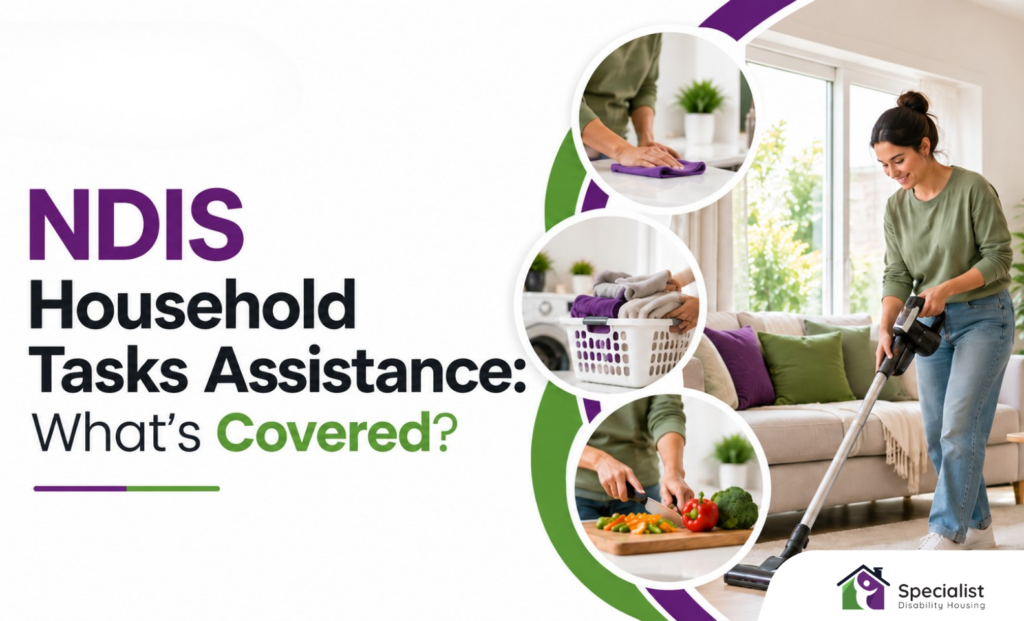
Common examples can include cleaning, laundry, meal preparation and household organisation.
Cleaning
Routine cleaning can help maintain a safe and hygienic home environment.
Depending on the participant’s support needs, assistance may include:
- Vacuuming
- Mopping
- Cleaning bathrooms
- Cleaning kitchen surfaces
- Washing dishes
- Emptying bins
- General household cleaning
- Maintaining commonly used living areas
The focus should be on supporting essential household needs related to the participant’s disability rather than general cosmetic improvements.
Laundry and Linen
Laundry can involve several physical and organisational tasks.
Depending on individual needs, support may include:
- Washing clothes
- Drying clothes
- Folding clothes
- Putting clothes away
- Changing bed linen
- Maintaining regular laundry routines
For some participants, assistance with laundry can help maintain hygiene and make everyday routines easier to manage.
Meal Preparation
Preparing meals can become challenging when a participant has difficulty standing for long periods, handling kitchen equipment, following multiple steps or completing other cooking-related tasks.
Depending on the participant’s plan, support may involve:
- Planning meals
- Preparing ingredients
- Cooking
- Organising meals
- Safely storing prepared food
- Developing basic cooking routines
Support can also be provided in a way that encourages the participant to take part and develop skills where appropriate.
Household Organisation
A well-organised home can make everyday activities easier.
Some participants may need assistance with:
- Organising household items
- Tidying living areas
- Creating household routines
- Organising cupboards
- Managing everyday household systems
- Maintaining clear pathways
For participants using mobility equipment, keeping pathways clear can also be an important part of maintaining accessibility around the home.
What Household Tasks May Not Be Covered?
Not every household expense or service is automatically funded through the NDIS.
Household task assistance generally relates to disability-related support needs rather than ordinary household expenses.
For example, NDIS funding is not generally intended to cover:
- Rent or mortgage payments
- Utility bills
- Groceries
- Major structural repairs
- Cosmetic home improvements
- General household expenses
Home modifications and specialised housing are also different types of NDIS support and may fall under other funding categories.
Participants should always check their individual plan and current NDIS rules before arranging a service.
Who Can Receive Household Tasks Assistance?
Household task assistance may be relevant to NDIS participants whose disability creates a barrier to managing essential household activities.
The type of barrier can vary significantly.
For example, someone with a physical disability may have difficulty bending, lifting, standing or moving around the home.
Another participant may experience difficulties with planning, organisation, memory or establishing consistent routines.
The appropriate level of assistance will depend on the individual’s needs and circumstances.
How Household Support Can Encourage Independence
Household assistance does not always mean a support worker completes everything for the participant.
In some situations, support can be provided alongside the participant to help them develop skills and confidence.
For example, a support worker may:
- Help a participant plan a meal
- Encourage them to participate in cooking
- Assist with organising household items
- Help establish a cleaning routine
- Provide support while the participant completes a task
This approach can create opportunities for participants to develop greater independence over time.
The right approach depends on what the participant wants and what they are able to do safely.
The Connection Between Housing and Household Support
The home environment can influence how easily a person can complete everyday activities.
For eligible participants, Specialist Disability Accommodation can provide specialised housing designed around particular accessibility and support requirements.
An appropriately designed home can help participants navigate their living environment more comfortably and safely.
For example, suitable layouts and accessibility features may make it easier to move around the property, use living spaces and receive support.
SDA itself is housing. It does not replace personal or household support that may be separately funded through an individual’s NDIS plan.
Creating a Safe and Comfortable Home
A safe home environment can make everyday life more manageable.
Participants may benefit from a living environment where accessibility and individual requirements have been considered.
This can include appropriate:
- Space
- Accessibility
- Bathroom design
- Kitchen access
- Bedroom arrangements
- Movement around the property
- Areas for mobility equipment
- Support worker access
The right environment can complement other supports and help participants work towards their everyday goals.
Household Support and Independent Living
For someone working towards greater independence, household tasks can become opportunities to develop practical skills.
A participant may gradually become more confident with:
- Cooking
- Cleaning
- Laundry
- Organisation
- Shopping
- Planning routines
- Managing household activities
Progress does not have to happen all at once.
Small improvements in everyday skills can contribute to greater confidence and participation over time.
Choosing the Right Living Environment
When considering disability housing, participants may want to think about how the property will support their everyday routines.
Questions to consider include:
- Is the property accessible?
- Is there enough space for mobility equipment?
- Is the layout suitable for support needs?
- Can support workers access the home appropriately?
- Are essential areas easy to use?
- Is the location suitable for community access?
- Does the property provide the level of accessibility required?
The right home should support the person’s lifestyle rather than create additional barriers.
When Support Needs Change
A participant’s household support needs can change over time.
Changes may occur when:
- Disability-related needs change
- A participant develops new skills
- Living arrangements change
- A participant moves into new accommodation
- New personal goals are established
Regularly considering whether the current support arrangement continues to meet the participant’s needs can help maintain an appropriate balance between assistance and independence.
Treat You as an Individual, Not Just a Case Number
A person-centred approach means your unique needs and goals drive the service.
At Specialist Disability Housing, we understand that every participant has different housing requirements, preferences and goals.
The right living environment should support your everyday life, not simply provide a place to stay.
Whether you are considering SDA or looking for a home that better supports your accessibility and independence, your individual circumstances should remain at the centre of the conversation.
Let’s Stay Connected
Finding the right SDA provider is crucial to your independence and wellbeing. At Specialist Disability Housing, we’re committed to providing quality accommodation and support that helps you thrive.
Let’s Stay Connected
Looking for assisted living or disability housing support?
Email: info@sdhwa.com.au
Phone: (08) 9468 5550
Website: www.sdhwa.com.au
FAQ’s
Can NDIS funding cover household tasks?
Eligible participants may receive assistance with household tasks when the support relates to their disability-related needs and is included or permitted under their NDIS plan.
What household tasks can NDIS support cover?
Depending on the participant’s plan and circumstances, support may include cleaning, laundry, meal preparation and household organisation.
Does NDIS household support include groceries and household bills?
Generally, everyday household expenses such as groceries, rent, mortgage payments and utility bills are not the same as funded household task assistance.
Can household support help me become more independent?
Yes. Where appropriate, support workers can work alongside participants to develop practical household skills and confidence rather than simply completing every task for them.
Is household support included with SDA?
SDA provides specialised housing for eligible participants. Household or personal support is separate and depends on the participant’s individual NDIS plan and support needs.