

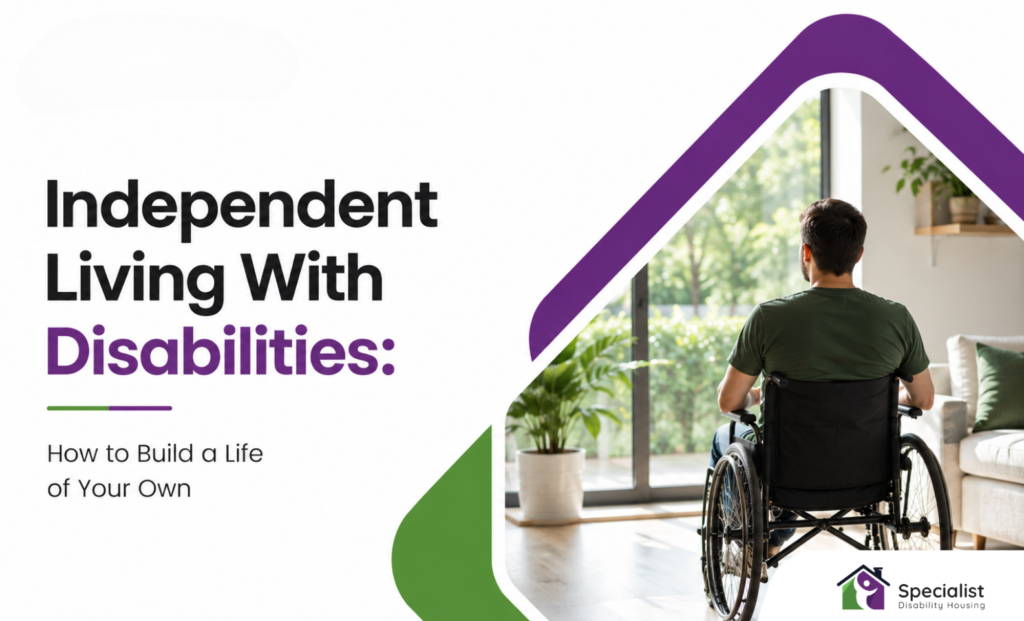
Living independently is something many people take for granted making your own decisions, setting your own routine, and shaping your own day. For people living with disability, that same independence is just as possible, with the right home and the right supports.
Independent living with disabilities is not about doing everything alone. It is about having the freedom to live your way, with help available when and where you need it.
What Does Independent Living Mean?
Independent living is a way of life where people with disability have control over their own daily decisions where they live, how they spend their time, who supports them, and what goals they pursue. It is built on the belief that disability does not limit a person’s right to choose.
In practical terms, independent living can look very different from one person to the next. Some live alone in private rentals. Others share homes with friends or housemates. Many use NDIS-funded supports to make daily life manageable and safe.
Types of Independent Living Arrangements
There is no single way to live independently with a disability. Common arrangements include:
- Renting or owning a home with support workers visiting as needed.
- Shared living with friends, partners, or other participants.
- Specialist Disability Accommodation (SDA) homes with on-site support.
- Community housing tailored to accessibility needs.
- Supported Independent Living (SIL) homes with rostered support staff.
The best option depends on your support needs, lifestyle, and long-term goals.
Supports That Make Independent Living Possible
For most people with disability, independent living is supported by a mix of NDIS-funded services. These often include:
- Support workers for personal care, cooking, cleaning, and community access.
- Assistive technology such as communication devices, mobility aids, and smart home tools.
- Home modifications to improve accessibility and safety.
- Therapy supports to build daily living skills.
- Support coordination to keep all your supports working together.
Each support is chosen based on what helps the person live as independently and confidently as possible.
Skills That Build Independence
Independent living often grows over time, with skills being built step by step. Common areas of focus include managing money, cooking and meal planning, using public transport, communicating with services, maintaining a home, and looking after personal health.
Skill-building does not mean working alone it means having someone alongside you while you learn, until you can do more things confidently on your own.
How the NDIS Supports Independent Living
The NDIS plays a key role in making independent living possible. Funding can cover support workers, training programs, equipment, and home adjustments. For those with higher support needs, SIL and SDA funding may also be included.
The goal of the NDIS is not to take over a person’s life, but to provide the supports that allow them to live the life they choose with as much independence as possible.
Choosing the Right Support Team
Independent living depends on having reliable, respectful people around you. The right support team listens, adapts to your needs, and works with you to build the skills and confidence you want to grow. Look for providers who focus on choice, dignity, and consistency.
Conclusion
Independent living with disabilities is not a single destination it is a personal journey shaped by your goals, supports, and home. With the right combination of housing, services, and people, life on your own terms is not just possible, it is the standard you deserve.
📞 Let’s Stay Connected
Looking for independent living support or disability housing?
📧 info@sdhwa.com.au
📞 (08) 9468 5550
🌐 www.sdhwa.com.au
FAQ’s
1. What is independent living for people with disabilities?
It is a way of living where people with disability make their own choices about their home, daily routine, and supports, with help available as needed.
2. Can I live independently with high support needs?
Yes. Many people with high support needs live independently through SIL and SDA arrangements that provide round-the-clock assistance.
3. Does the NDIS pay for my rent if I live independently?
No. The NDIS does not cover rent. It funds the supports, training, and equipment that make independent living possible.
4. What skills do I need for independent living?
Useful skills include cooking, budgeting, transport use, household tasks, and self-care all of which can be developed with the right support.
5. How do I get started with independent living?
Start by speaking with your support coordinator or a disability housing specialist who can help you identify the right supports and accommodation options.