

Living independently is about more than having a home of your own. It is also about making everyday decisions, developing practical skills and having greater control over your daily routine.
For people living with disability, independent living skills can develop gradually with the right support, encouragement and opportunities to practise everyday activities.
From preparing meals and managing household tasks to organising appointments and participating in the community, these skills can help individuals build confidence and work towards their personal goals.
The level of support required will differ from person to person. Some individuals may need occasional assistance, while others may benefit from regular support with daily activities.
Understanding which skills can be developed and how appropriate support can help is an important step towards greater independence.
What Are Independent Living Skills?
Independent living skills are the practical abilities that help a person manage everyday life according to their preferences and circumstances.
These skills can include personal care, household management, communication, budgeting and decision-making.
For people with disability, developing these abilities does not necessarily mean completing every activity without assistance. It means having opportunities to participate in daily life, make choices and do as much as they comfortably and safely can.
Depending on individual goals, independent living skills may involve:
- Preparing meals and following daily routines
- Maintaining a clean and organised home
- Managing personal belongings
- Communicating needs and preferences
- Planning activities and appointments
- Developing budgeting and money-management skills
- Accessing community facilities and services
The focus should always be on the individual’s abilities, goals and preferred level of independence.
Essential Skills That Support Independent Living
1. Personal Care and Daily Routines
Personal care can involve activities such as dressing, grooming, maintaining personal hygiene and following everyday routines.
Some individuals may manage these activities independently, while others require assistance or adaptive equipment.
Establishing a routine that suits the person’s needs can help make daily activities more predictable and manageable.
Support workers can assist where required while respecting the individual’s privacy, dignity and choices.
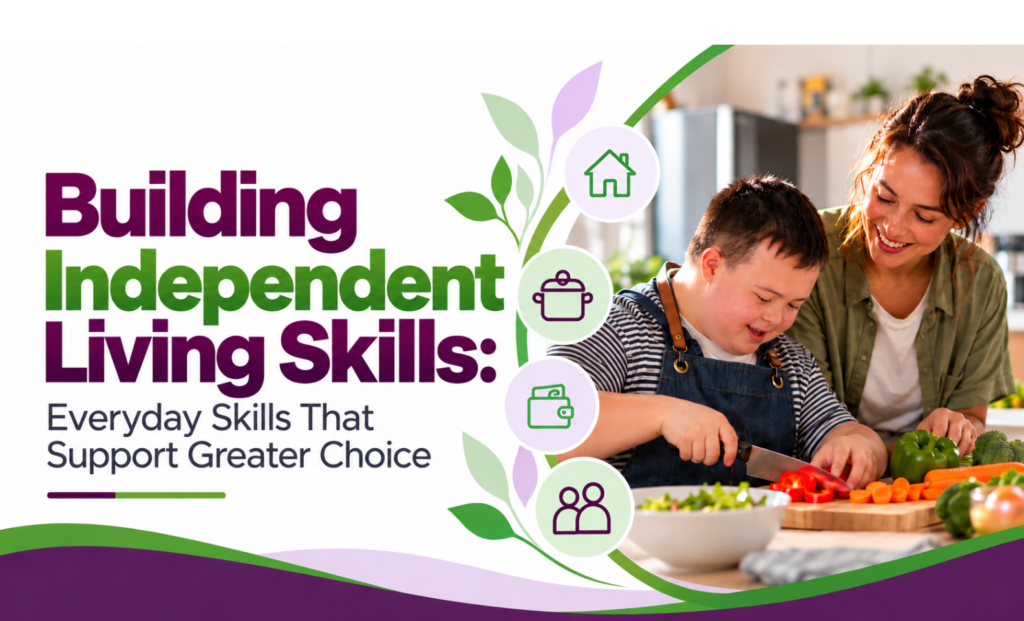
2. Cooking and Meal Preparation
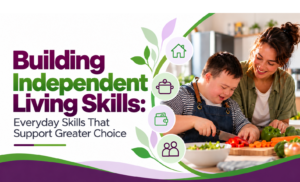
Preparing meals is an important part of everyday living. It can also provide opportunities to develop planning, coordination and decision-making skills.
Depending on individual abilities, learning may involve:
- Choosing meals and planning a weekly menu
- Identifying ingredients
- Following simple recipes
- Using suitable kitchen equipment
- Understanding basic food safety
- Storing food appropriately
Accessible kitchen layouts and suitable equipment can make these activities easier for some people.
The aim is to encourage participation at a level that is appropriate for the individual’s abilities and safety requirements.
3. Household Management
Managing a home involves several recurring activities, including cleaning, laundry, organising belongings and maintaining household routines.
These tasks can be introduced gradually rather than treated as one large responsibility.
For example, an individual may begin by organising personal belongings before progressing to other household activities with assistance where needed.
Keeping commonly used items accessible and maintaining clear pathways can also help create a more comfortable living environment.
4. Budgeting and Money Management
Understanding everyday expenses can help individuals make informed decisions about their spending.
Depending on their goals, useful skills may include recognising different payment methods, comparing prices, planning purchases and keeping track of expenses.
Visual reminders, budgeting tools and step-by-step guidance may help some individuals understand financial routines.
The level of assistance should reflect the person’s circumstances while supporting their participation in financial decisions wherever possible.
5. Communication and Decision-Making
Independent living involves expressing preferences, communicating concerns and making choices about everyday activities.
This may include deciding what to eat, explaining support needs, choosing activities or discussing preferred living arrangements.
Some individuals may benefit from communication aids, additional processing time or support to understand available options.
Respecting a person’s communication style and giving them meaningful opportunities to make decisions are important parts of person-centred support.
How Support Workers Can Help Build Independence
Support workers can help individuals practise everyday skills while providing assistance when needed.
Rather than automatically completing every task, a worker may break an activity into smaller steps, demonstrate a technique or encourage the individual to participate in the parts they can manage.
For example, during meal preparation, a support worker might help organise ingredients while the participant chooses the meal and completes suitable preparation steps.
Support should never be based on a one-size-fits-all approach. The right balance between assistance and participation depends on the person’s abilities, preferences, goals and safety requirements.
The Role of Disability Housing in Independent Living
The home environment can influence how easily a person manages everyday activities.
For eligible NDIS participants, Specialist Disability Accommodation (SDA) provides specialised housing designed for people who meet the relevant eligibility requirements and have significant disability-related housing needs.
Depending on the property and the individual’s requirements, accessibility features may support movement around the home, access to essential living areas and the use of assistive equipment.
Supported Independent Living (SIL), where appropriate and funded, can provide assistance with everyday activities in a shared or individual living arrangement.
SDA and SIL serve different purposes. SDA relates to specialised housing, while SIL relates to assistance with daily living. Neither automatically replaces the need to consider a participant’s individual support requirements.
Creating a Personalised Independent Living Plan
Building independence is often more manageable when goals are realistic and specific.
A personalised plan may include:
- Identifying everyday activities the individual wants to improve
- Recognising tasks where assistance is required
- Breaking larger activities into manageable steps
- Choosing appropriate tools, equipment or support
- Reviewing progress and adjusting goals over time
Progress may look different for every individual. Developing confidence in one activity can be just as meaningful as learning to complete several tasks independently.
Treat You as an Individual, Not Just a Case Number
At Specialist Disability Housing, we understand that every person’s housing requirements, preferences and goals are different.
A supportive living environment should respect individual choices and help people work towards the lifestyle they want.
Whether you are exploring Specialist Disability Accommodation or considering housing that better suits your accessibility requirements, your needs and future goals should remain central to the decision.
The right combination of housing, practical assistance and opportunities to develop skills can help create a more comfortable and empowering everyday living experience.
Let’s Stay Connected
Finding the right disability housing provider is an important part of working towards comfort, choice and independence. At Specialist Disability Housing, we understand that every participant has different requirements and goals.
Looking for assisted living or disability housing support?
Email: info@sdhwa.com.au
Phone: (08) 9468 5550
Website: www.sdhwa.com.au
FAQ’s
What are independent living skills for people with disabilities?
Independent living skills are everyday abilities such as personal care, cooking, cleaning, budgeting, communication and managing routines. The skills required depend on each person’s circumstances and goals.
Can people with high support needs develop independent living skills?
Yes. People with higher support needs can participate in daily activities and work towards personal goals with appropriate assistance, accessible environments and suitable equipment.
How can support workers help develop independent living skills?
Support workers can provide guidance, demonstrate tasks, encourage participation and help individuals practise everyday activities at a pace suited to their abilities.
Does the NDIS fund independent living support?
Eligible participants may receive funding for reasonable and necessary supports that meet the applicable NDIS requirements and align with their individual circumstances and plan.
How does disability housing support independent living?
Suitable housing can improve accessibility and make everyday activities easier to manage. For eligible participants, SDA may provide specialised housing, while separately funded supports may assist with daily living activities.