

Understanding Your NDIS Accommodation Options
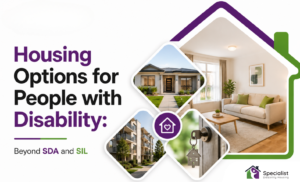
People with disabilities have different housing needs at different life stages. The NDIS supports multiple accommodation options to meet these varying needs, from specialist settings to independent living.
Understanding all available options helps you make informed decisions about the housing solution that best supports your independence, safety, and quality of life.
Specialist Disability Accommodation (SDA)
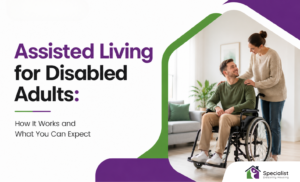
SDA is specialist housing designed for people with significant disability support needs. It features:
- Modified accessibility for mobility, sensory, or cognitive disabilities
- Specialised design to support independent functioning
- Staff support services available 24/7 when needed
- Shared or independent living arrangements
- Support for daily tasks, community access, and health management
SDA is ideal for people requiring substantial built environment modifications and regular support services.
Supported Independent Living (SIL)
SIL allows you to live in your own home (rented, owned, or family property) while receiving support services. SIL includes:
- Flexible support hours tailored to your needs
- Assistance with daily living, budgeting, and community access
- Your choice of where and with whom you live
- Greater control over your living arrangements
- Support for developing independent living skills
SIL suits people who want independence with professional support services.
Short-Term Accommodation (STA)
STA provides temporary accommodation for brief periods. Common uses include:
- Crisis or emergency accommodation
- Respite breaks from regular support arrangements
- Recovery from illness or injury
- Trial periods before permanent accommodation changes
- Family relief when regular carers need a break
STA offers flexibility for temporary housing needs while maintaining connection to regular supports.
Medium-Term Accommodation (MTA)
MTA provides longer transitional housing. It’s useful for:
- Transitioning between accommodation arrangements
- Testing suitability before permanent moves
- Supporting people through major life changes
- Stabilisation while permanent solutions are arranged
- Building independent living skills in a supported setting
MTA bridges the gap between crisis accommodation and permanent arrangements.
Choosing the Right Option for You
Selecting appropriate accommodation depends on several factors:
- Your support needs and disability type
- Desired level of independence and choice
- Preference for shared or independent living
- Location requirements and community connections
- Financial circumstances and funding availability
- Life stage and future goals
- Family involvement preferences
Discuss these factors with your Local Area Coordinator to identify the best fit.
Transitioning Between Options
Your housing needs may change over time. Many people move between options as their circumstances evolve. Providers should support transitions smoothly through:
- Adequate notice periods for planning
- Assistance moving to new accommodation
- Continuity of support during transitions
- Clear communication about new arrangements
- Review of support plans for the new setting
Quality providers facilitate transitions while minimising disruption.
Let’s Stay Connected
Your home should support your independence and quality of life. At Specialist Disability Housing, we understand that everyone’s needs are different. We’re here to help you find the accommodation option that’s right for you.
📞 Let’s Stay Connected
Looking for help preparing for your next NDIS plan reassessment?
📧 info@sdhwa.com.au
📞 (08) 9468 5550
FAQ’s
- How do I know which accommodation option is best for me?
Consider your support needs, independence level, preferences for shared or independent living, and future goals. Your Local Area Coordinator can help you decide. - Can I move between accommodation options if my needs change?
Yes, NDIS accommodation is flexible. You can transition between SDA, SIL, STA/MTA as your circumstances change and your goals evolve. - What’s the difference between SDA and SIL?
SDA is specialist housing with built-in modifications and support services. SIL lets you live in your own home with flexible support services. - Can I use STA or MTA while deciding on permanent accommodation?
Yes, these temporary options are specifically designed to provide flexibility while you explore permanent solutions. - What if I’m unhappy with my current accommodation arrangement?
Discuss concerns with your provider and Local Area Coordinator. The NDIS accommodations are flexible ,your needs can be reassessed and arrangements changed if appropriate.