

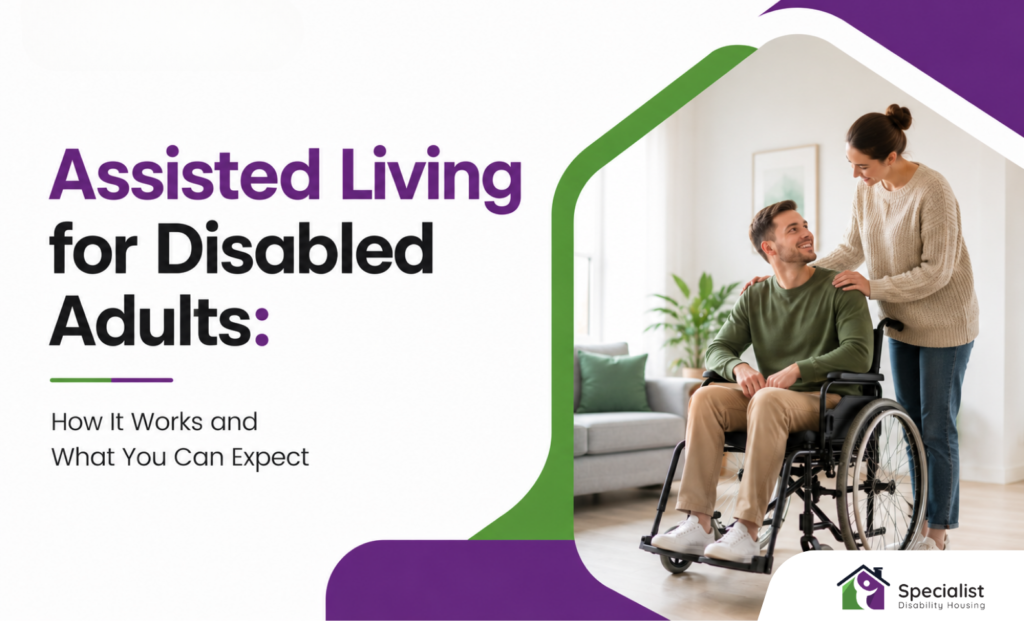
For many adults living with disability, the dream is simple – a home of their own, with the right help to live well. Assisted living for disabled adults makes that possible. It blends independent living with daily support, giving people the freedom to manage their own lives while having reliable help on hand whenever they need it.
Whether you are exploring assisted living for yourself or a family member, understanding how it works can help you make a confident, informed decision.
What Is Assisted Living for Disabled Adults?
Assisted living is a housing model designed for adults who need ongoing support but want to maintain their independence. It typically combines private or shared living arrangements with daily support services delivered by trained staff.
In Australia, assisted living for disabled adults is most commonly delivered through Supported Independent Living (SIL), often within Specialist Disability Accommodation (SDA) homes or community housing houses.
What Services Are Included?
Assisted living services vary based on each participant’s needs, but commonly include:
- Help with personal care such as showering, dressing, and grooming.
- Assistance with meal preparation, cooking, and grocery shopping.
- Household tasks including cleaning, laundry, and home maintenance support.
- Medication administration &/or prompt. Reason being some participants are unable to administer their medications.
- Transport and community access support.
- Skill building for budgeting, communication, and decision-making.
- Overnight support, including active or sleepover shifts if needed.
The level of support is tailored some residents need help with just a few daily tasks, while others require 24/7 care.
Who Is Assisted Living For?
Assisted living suits adults with a wide range of disabilities, including physical, intellectual, neurological, and psychosocial conditions. It is particularly useful for people who:
- Cannot safely live alone without daily support.
- Want more independence than family care or supported residential services provide.
- Need consistent staffing around medications, health, or routines.
- Benefit from being part of a small, structured community.
It is not limited by age, but is most commonly used by adults from late teens through to older age.
Shared vs Individual Assisted Living
Many assisted living arrangements are shared homes, where two to five residents live together with shared support staff. Shared homes can be more affordable, provide companionship, and create a sense of community.
Other participants prefer individual living, with their own home and dedicated support staff. This option offers more privacy and is often chosen by people with complex needs or who simply value living alone.
How the NDIS Funds Assisted Living
The NDIS funds the support component of assisted living through SIL funding, included under Core Supports. For participants with extreme functional impairment, the housing itself may be funded through SDA.
Rent, food, and utilities are not covered by the NDIS these are paid by the resident from their own income, in line with how any tenant pays for their home.
Choosing the Right Assisted Living Provider
A quality assisted living provider does more than provide a roof and rostered shifts. They focus on dignity, consistent staffing, transparent communication, and supporting each resident to grow in independence. Look for providers who match residents thoughtfully, involve participants in decisions, and offer a stable, respectful home environment.
Conclusion
Assisted living for disabled adults offers a balanced way of life independence, community, and reliable support all under one roof. With the right home and the right provider, it becomes a place where people thrive, not just live.
 Let’s Stay Connected
Looking for assisted living or disability housing support?
 info@sdhwa.com.au
(08) 9468 5550

FAQ’s
1. What is assisted living for disabled adults?
It is a housing model where adults with disability live independently in a home with daily support from trained staff, often delivered through NDIS-funded SIL .
2. Is assisted living the same as a nursing home?
No. Assisted living is designed around independence and disability support, while nursing homes focus on aged care and full-time clinical care.
3. Does the NDIS pay for rent in assisted living?
No. The NDIS funds the support hours and, in some cases, the housing through SDA, but rent and living costs are paid by the resident.
4. Can I choose who I live with?
Yes. Most providers involve participants in matching, and you can refuse a home if you do not feel it is the right fit.
5. What if my support needs change over time?
Your support plan can be reviewed and adjusted. Providers can usually increase or adjust support hours as your needs evolve.