

Introduction
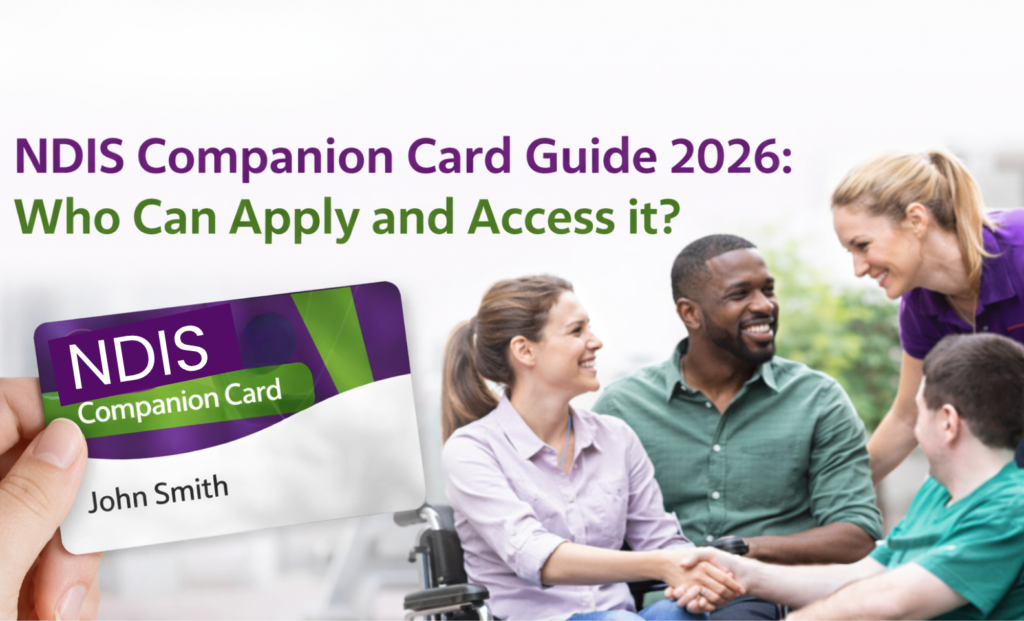
Accessing community events, transport, and public spaces can sometimes be challenging for people with disabilities. This is where the NDIS Companion Card plays an important role. It allows a support person or carer to accompany an individual without additional entry costs, making participation more inclusive and accessible.
In 2026, while the Companion Card is not directly funded under the National Disability Insurance Scheme, it works alongside NDIS supports to improve independence and social participation.
What is a Companion Card?
The Companion Card is a government-issued card for people with a significant and permanent disability who require lifelong support to attend community activities.
It ensures that a companion (carer or support worker) can attend venues and events free of charge, when support is essential.
How the Companion Card Works with NDIS
Although the Companion Card is separate from NDIS funding, it complements supports like:
- Supported Independent Living (SIL)
- Specialist Disability Accommodation (SDA)
- Community participation funding
Participants using NDIS housing supports such as SDA housing or SIL accommodation often benefit from the Companion Card when attending social or recreational activities.
How to Apply for a Companion Card
The application process involves:
- Download or request an application form from your state’s Companion Card program
- Provide medical and professional verification
- Submit details about your support needs
- Wait for assessment and approval
Once approved, the card is valid across participating venues and services.
Where Can You Use a Companion Card?
The Companion Card is accepted at a wide range of venues and services across Australia, making it easier for people with disability to participate in everyday activities with the support of a companion. It is commonly recognised for:
- Cinemas and theatres
- Concerts and sporting events
- Zoo and museum entry
- Public transport services
- Selected travel services, such as Rottnest Island ferries in Western Australia
- Community programs and activities
Many service providers across Australia recognise the Companion Card, helping cardholders access events, travel, and social opportunities more easily.
Why the Companion Card Matters for NDIS Participants
The Companion Card enhances the value of NDIS supports by:
- Reducing financial barriers
- Encouraging community inclusion
- Supporting independent living goals
- Improving quality of life
For individuals living in NDIS accommodation or receiving housing support services, it enables greater freedom to engage socially.
Key Differences: NDIS vs Companion Card
| Feature | NDIS | Companion Card |
| Purpose | Funding for disability supports | Access support for companions |
| Coverage | Includes housing, care, therapy | Covers companion entry costs |
| Application | Through NDIS | Through state programs |
| Funding | Government-funded plans | Not a funding scheme |
Conclusion
The Companion Card is a valuable support tool that works alongside the NDIS to improve accessibility and inclusion. While it does not replace NDIS funding, it plays a crucial role in helping individuals participate fully in society.
In 2026, combining NDIS housing supports, such as SDA and SIL, with the Companion Card can significantly enhance independence and community engagement.
📞 Let’s Stay Connected
Looking for guidance or personalised disability support?
📧 info@sdhwa.com.au
📞 (08) 9468 5550
🌐 www.sdhwa.com.au
FAQ’s
1. Is the Companion Card part of the NDIS?
No, the Companion Card is separate but complements NDIS supports.
2. Can all NDIS participants get a Companion Card?
Not automatically. You must meet specific eligibility criteria related to lifelong support needs.
3. Does the Companion Card cover accommodation costs?
No, it only covers entry or participation costs for a companion, not housing or accommodation.
4. Can I use the Companion Card anywhere in Australia?
Yes, it is recognised at participating venues nationwide.
5. How long does it take to get approved?
Processing times vary by state, but it may take several weeks after submission.