

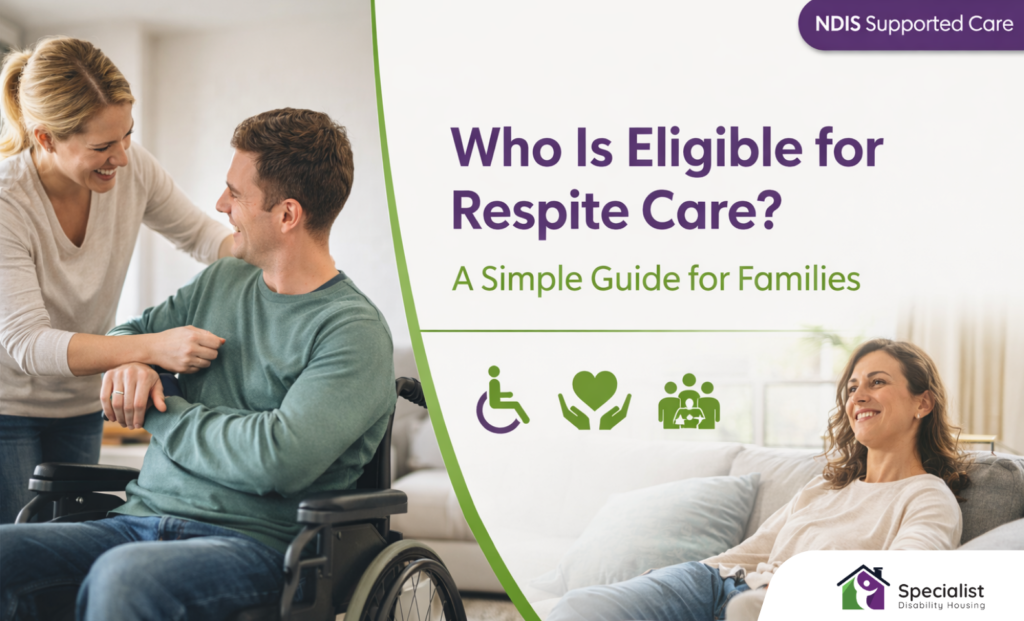
Caring for a loved one can be rewarding, but it also comes with physical and emotional demands. That’s where respite care services play an important role. They provide temporary support, giving both participants and their caregivers a much-needed break.
If you’re wondering whether you or your loved one qualifies for respite care, this guide will help you understand eligibility, benefits, and how to access services.
What Is Respite Care?
Respite care is short-term support designed to assist individuals when their usual caregiver is unavailable or needs time to rest. It ensures continuity of care while helping maintain the wellbeing of both the participant and their family. Respite care can be planned in advance or arranged during emergencies, depending on your situation.
Who Can Access Respite Care?
Eligibility for respite care in Australia is generally based on a person’s support needs, health condition, and caregiving situation.
You may be eligible if you:
- Require assistance with daily living activities, such as mobility, personal care, or household tasks
- Have a primary caregiver who needs temporary support or a break
- Are living with a disability or ongoing health condition
- Need short-term care due to recovery, transition, or increased support needs
Eligibility is usually determined through an assessment process to ensure the support aligns with individual requirements.
When Should You Consider Respite Care?
Respite care can be helpful in many situations, not just emergencies. You may consider it when:
- The caregiver is feeling physically or emotionally overwhelmed
- You need time to focus on work, personal commitments, or rest
- The participant would benefit from social interaction and new environments
- There is a temporary change in health or support needs
- You are planning a short break, travel, or time off
Recognising the right time to seek respite care can help prevent burnout and ensure consistent support.
How Is Eligibility Assessed?
To access funded respite services, individuals may need an assessment through relevant support systems such as the NDIS or other care programs.
The process generally includes:
- Registering with the appropriate support program
- Completing a needs assessment
- Receiving approval for suitable services
- Being connected with service providers
This ensures that care is tailored to each individual’s needs and goals.
Benefits of Respite Care
Respite care offers meaningful benefits for both participants and caregivers:
- Supports caregiver wellbeing and helps prevent burnout
- Ensures continuous and reliable care
- Encourages social interaction and participation
- Helps individuals maintain independence and quality of life
How SDH Can Support You
At SDH, we understand that every individual has unique support needs. Our team works closely with participants and families to provide flexible, person-centred respite care services.
Whether you need short-term assistance at home or guidance in accessing support, we are here to help you every step of the way.
Conclusion
Respite care is an essential support service that helps maintain balance for both participants and their caregivers. By offering temporary assistance, it ensures continuity of care while promoting wellbeing and independence.
Understanding eligibility and recognising when to seek support is the first step toward accessing the right care. If you or your loved one could benefit from respite care, exploring your options early can make a meaningful difference.
If you’re ready to explore Specialist Disability Housing options, we’re here to help.
📞 Let’s Stay Connected
Looking for guidance or personalised disability support?
📧 info@sdhwa.com.au
📞 (08) 9468 5550
🌐 www.sdhwa.com.au
FAQ’s
How long can respite care be provided?
Respite care duration varies depending on individual needs, ranging from a few hours to several weeks.Is respite care covered under the NDIS?
Yes, respite care may be funded under NDIS plans if it aligns with your goals and support needs.Can respite care be arranged urgently?
Yes, emergency respite services are available in situations where immediate support is required.Do I need an assessment to access respite care?
Yes, most funded services require an assessment to determine eligibility and support requirements.Can respite care be provided at home?
Yes, in-home respite care is a common option, allowing individuals to receive support in a familiar environment.