

Preparing for your NDIS planning meeting can make a significant difference to your confidence and the outcome of your plan. Understanding the process in advance will help you feel informed, organised, and ready to advocate for yourself.
1. Introduction and Purpose of the Meeting
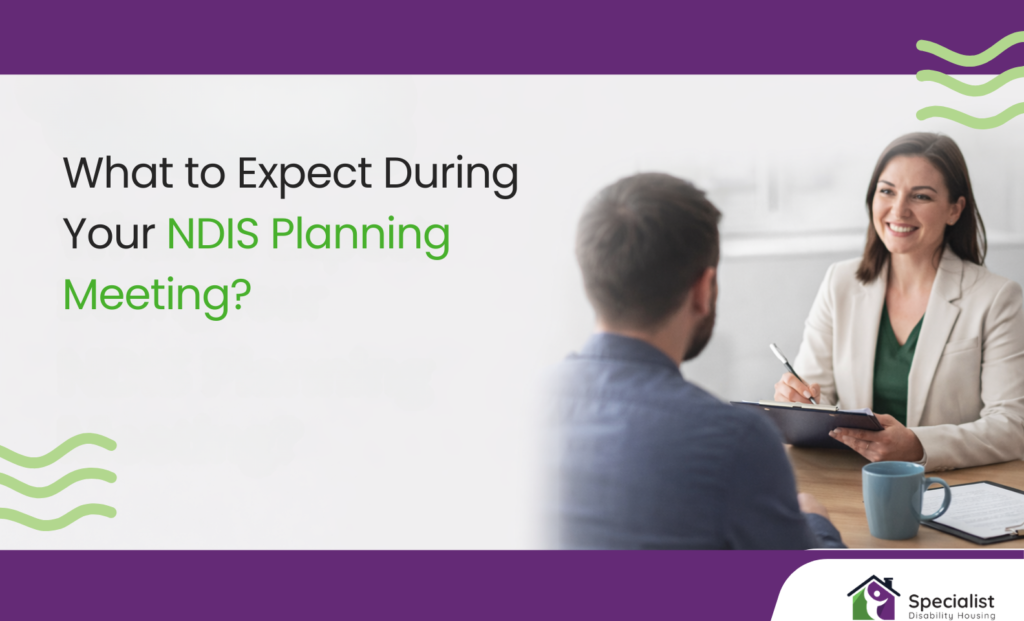
Your planner, representing the National Disability Insurance Agency (NDIA), will begin by introducing themselves and explaining the purpose of the meeting. The goal is to gather information about your circumstances, goals, and support needs so your NDIS plan can be developed appropriately.
2. Discussion About Your Current Situation
The planner will ask questions about your living arrangements, daily routines, employment or education status, and the supports you currently receive. This includes informal supports from family and friends as well as formal supports such as therapy or personal care.
Be open and detailed about how your disability affects your day-to-day life. Explain what you can do independently and where you require assistance. Providing clear examples helps the planner better understand your situation and identify any gaps in support.
3. Goal Setting
A key part of the meeting focuses on your short-term and long-term goals. These goals might relate to independence, employment, education, community participation, health, or social connections.
Think in advance about what you want to achieve over the next 12 months and beyond. Your supports and funding are linked to these goals, so it is important to communicate them clearly. The more specific your goals are, the easier it is to justify the supports needed to achieve them.
4. Assessing Your Support Needs
During this stage, the planner will discuss the types of supports you require. This may include:
- Personal care and daily living assistance
- Therapy services (such as occupational therapy or speech therapy)
- Assistive technology
- Community access and participation
- Capacity-building supports
The planner will use this information to develop a support package that reflects your disability, age, current circumstances, and level of informal support. It is essential to explain not only what you currently receive, but also what additional supports you genuinely need.
5. Plan Development
Based on the information gathered, the planner prepares your NDIS plan. Funding is generally guided by what is considered a “typical support package” for someone with similar circumstances. In some cases, higher funding may be approved if there is strong evidence demonstrating greater or more complex needs.
Once approved, you will receive your plan outlining the funded supports. Because changes cannot usually be made before finalisation, it is important to ensure you clearly communicate everything during the meeting itself.
Conclusion
Your NDIS planning meeting is an opportunity to ensure your supports align with your goals and daily realities. By preparing carefully, communicating clearly, and advocating confidently, you can help ensure your plan reflects your true needs.
Approach the meeting as a partnership conversation—one where your voice matters. With preparation and the right support beside you, you can navigate the process with confidence and work towards achieving your goals through the
NDIS.
Looking for guidance or personalised disability support?
📧 info@sdhwa.com.au
📞 (08) 9468 5550
🌐 www.sdhwa.com.au
FAQ’S
What should I bring to my NDIS planning meeting?
Bring identification, any medical or therapy reports, assessments, quotes for supports or assistive technology, and a written list of your goals and daily support needs.
Can I bring someone with me to the meeting?
Yes. You can bring a Support Coordinator, family member, friend, or advocate to help communicate your needs and provide additional information.
How long does an NDIS planning meeting usually take?
Most meetings take between 1 to 2 hours, depending on the complexity of your situation and support needs.
What happens after the planning meeting?
After the meeting, the National Disability Insurance Agency (NDIA) reviews the information and finalises your NDIS plan. Once approved, you will receive a copy outlining your funded supports.
Can I change my plan if I’m not happy with it?
Yes. If you believe your plan does not meet your needs, you can request a review within the specified timeframe.