

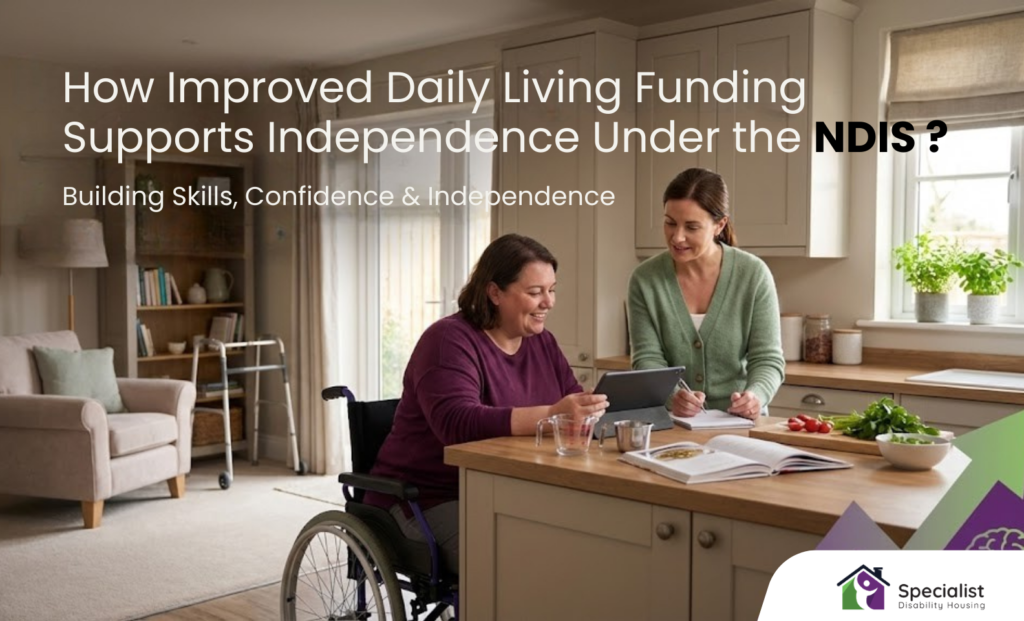
If you’re new to the NDIS – or even if you’ve been part of it for a while—you may have come across the term Improved Daily Living and wondered what it actually means. It sounds broad, and that’s because it is.
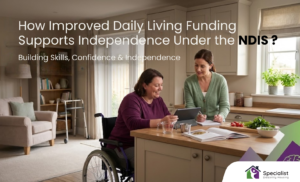
Improved Daily Living funding is one of the most practical and impactful parts of the NDIS. It focuses on building skills, confidence, and independence so people can manage everyday life more easily and work towards goals that matter to them.
Here, we’ll explain what Improved Daily Living funding is, what it can be used for, and how it supports real people in real-life situations.
What Is Improved Daily Living Funding?
Improved Daily Living sits under the Capacity Building category of the NDIS. Capacity Building supports are designed to help participants develop skills over time, rather than providing ongoing assistance to do tasks for them.
The purpose of Improved Daily Living funding is to help people:
- Build independence in everyday activities
- Improve communication, mobility, and emotional wellbeing
- Learn new skills or maintain existing ones
- Gain confidence to participate in home, work, and community life
These supports are usually delivered by allied health professionals, such as occupational therapists, speech pathologists, psychologists, and physiotherapists.
The focus is not on “fixing” someone-it’s about supporting people to live life in a way that suits them, their goals, and their circumstances.
What Can Improved Daily Living Funding Be Used For?
This funding can be used for a wide range of therapy-based supports, depending on the participant’s goals and needs. Some of the most common include:
Occupational Therapy (OT)
Occupational therapists help people develop practical daily living skills. This may include support with personal care routines, meal preparation, household tasks, time management, sensory regulation, or improving safety at home. OT is often used to build independence and confidence in everyday activities.
Speech Pathology
Speech therapists support communication in many forms- spoken language, alternative communication devices, sign language, or social communication skills. They may also help with swallowing and mealtime safety. These supports can benefit children, adults, and older participants alike.
Physiotherapy
Physiotherapy focuses on movement, strength, balance, and mobility. This may include improving physical function, managing pain, reducing fall risks, or maintaining mobility following injury or illness.
Psychology and Counselling
Psychological supports help with emotional wellbeing and mental health. This may involve managing anxiety or depression, building coping strategies, developing emotional regulation skills, or increasing self-confidence.
Assessments and Therapy Reports
Functional assessments, therapy plans, and progress reports are also funded under Improved Daily Living. These documents help track progress and are often important during NDIS plan reviews to show outcomes and ongoing needs.
In some cases, therapy may be supported by a support worker to help participants practise skills in real-life settings, such as the home or community.
What Does Improved Daily Living Look Like in Practice?
These supports are designed to be practical and person-centred, not clinical or rigid.
For example:
- A child may receive OT and speech therapy to support early development and communication.
- A young adult might work on budgeting, cooking, and routines to prepare for independent living.
- A teenager could receive psychology support to build emotional regulation and confidence at school.
- An older adult may use physiotherapy to improve strength and stay safe at home.
- A person with an intellectual disability might focus on communication strategies and sensory support in social environments.
The key is that therapy goals are linked to everyday life—not just sessions in a clinic.
How Is Improved Daily Living Funding Added to an NDIS Plan?
NDIS funding is based on your goals. If your goals relate to independence, skill-building, communication, mobility, or emotional wellbeing, Improved Daily Living supports may be considered reasonable and necessary.
During planning or review meetings, it’s important to:
- Clearly explain what you want to achieve
- Share how therapy will help you reach those goals
- Provide supporting reports or assessments where possible
Funding levels vary between participants and may change over time as goals and circumstances change.
What If You’re Unsure How to Use Your Funding?
Many participants feel unsure about how to use their Improved Daily Living funding—and that’s completely normal.
This is where Support Coordination can help. A Support Coordinator can:
- Explain how your funding works
- Help you find suitable providers
- Coordinate therapies and services
- Support you during plan reviews
With the right guidance, Improved Daily Living funding can be a powerful tool for building skills, confidence, and independence-step by step, at your own pace.
If you’re ready to explore Specialist Disability Housing Support options, we’re here to help.
 Let’s Stay Connected
Looking for guidance or personalised disability support? info@sdhwa.com.au
(08) 9468 5550
 www.sdhwa.com.au
FAQ’S
- What is Improved Daily Living funding?
It is NDIS Capacity Building funding that supports therapy and skill development to increase independence in everyday life. - What supports can it cover?
It can fund occupational therapy, speech therapy, physiotherapy, psychology, and related professional assessments. - Who can access this funding?
NDIS participants whose goals focus on independence, communication, mobility, emotional wellbeing, and daily living skills. - Can it pay for therapy reports?
Yes, assessments, therapy plans, and detailed progress reports are included under this category. - Does unused funding roll over?
No, Capacity Building funding does not roll over to the next NDIS plan period.