

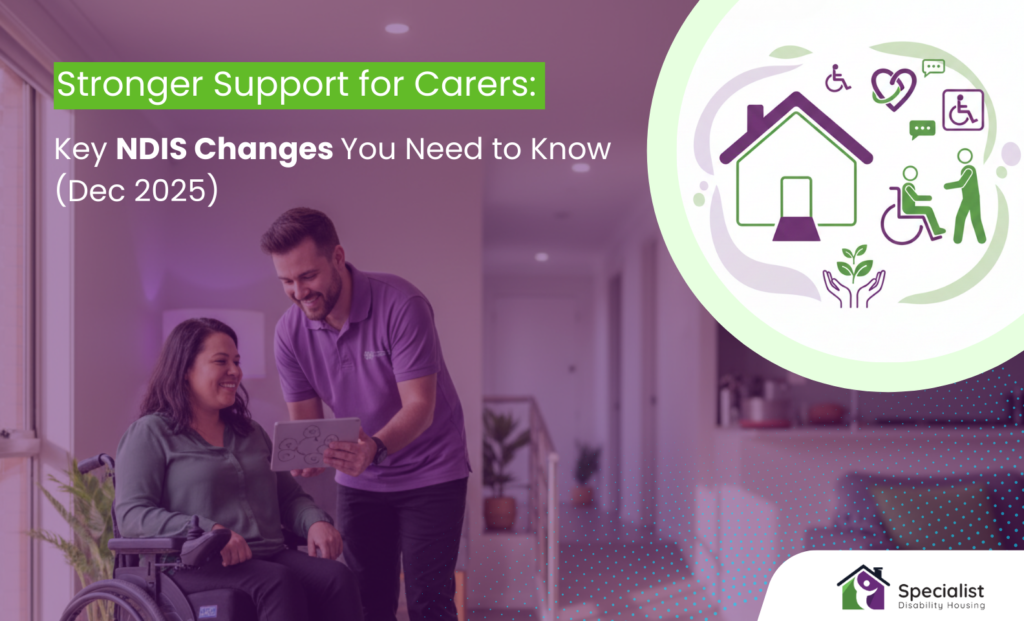
The National Disability Insurance Scheme (NDIS) continues to evolve to better support participants, carers, and service providers. December 2025 brings several important updates aimed at improving service delivery, strengthening the role of carers, and ensuring individuals with disability receive safe, reliable, and high-quality support. Below is a clear and concise overview of the key changes and what they mean for NDIS participants, families, and providers across Australia.1. What are the main NDIS updates for December 2025?
2. How do the updates support carers?
3. What changed for psychosocial disability supports?
4. How are provider standards strengthened?
5. What’s new for Home and Living supports?
Greater Recognition and Support for Carers
Carers play a vital role in the wellbeing of individuals with disability, and recent reforms place a stronger focus on acknowledging their contribution. New NDIS initiatives aim to improve access to respite options, reduce financial pressure on carers, and ensure they feel confident in managing the day-to-day challenges of providing support. The updated guidelines emphasise flexible respite arrangements that give carers more control and help participants access short-term accommodation, community programs, and therapeutic support when needed. These changes ensure carers can take meaningful breaks while participants continue receiving safe and appropriate care.Improved Clarity Around Psychosocial Disability Supports
A major update for December 2025 is improved clarity around psychosocial disability and the types of supports participants can access. The NDIS has released broader definitions and clearer guidelines to help people with mental health–related disabilities receive the right combination of community, therapy, and capacity-building services. Participants with psychosocial disability will now find it easier to access consistent support coordination, recovery-focused programs, and providers with specialised training. The goal is to make services more responsive to changing needs and reduce the confusion that previously surrounded access and eligibility.Strengthening Provider Quality and Safety Standards
To ensure all supports are delivered safely and ethically, the NDIS is introducing stricter quality requirements for providers. These include improved worker screening, better reporting obligations, and enhanced guidelines on how providers must manage risks. The NDIS Quality and Safeguards Commission is also increasing audits and compliance checks. Participants can expect safer service environments, more transparent pricing, and workers who meet higher training standards. Providers delivering high-risk supports—including behaviour support, personal care, and supported accommodation—will be required to meet additional safety benchmarks. This ensures participants receive professional, respectful, and appropriate care at all times.Changes to Home and Living Supports
The NDIS is making several adjustments to streamline Home and Living supports, including Supported Independent Living (SIL), Specialist Disability Accommodation (SDA), and Individualised Living Options (ILO).Key updates include:
- Clearer eligibility pathways for SDA and SIL
- Improved decision-making timeframes to reduce long waiting periods
- More flexibility so participants can combine different types of living supports
- Better communication between planners, support coordinators, and housing providers
Revised Plan Review and Appeal Processes
Plan reviews have been an area of frustration for many participants. New December 2025 reforms aim to simplify the process, reduce unnecessary delays, and improve communication during plan changes. The updated system places a stronger emphasis on:- Timely plan adjustments when needs change
- Fair and transparent review decisions
- Participants’ right to challenge decisions in a simple and accessible way
Improved Access for Rural and Remote Communities
To ensure equitable access, the NDIS is expanding telehealth options and investing in more outreach programs. This is especially important for participants in regional WA, where distance often makes it difficult to access face-to-face services. Participants will benefit from:- More virtual therapy and assessment options
- Programs designed specifically for remote communities
- Increased provider availability through hybrid service models